
The Land of Slopportunity


April 21, 1901
On Friday we got it working – most stubborn Union Pacific engine we ever touched. We were all grease and sweat and profanity, seconds away from calling it a wash.
The Baron announced a day off at the diamond. None of us are keen on baseball, but of course we held him to it.
On game day the booze and boos flowed freely. The jeering started when an Irish lad came out to sing the anthem. Not one hour later, most of those selfsame booers were in concessions lines.
My man Smith assured me they were not the types to dwell on inconsistencies. It irked me still. Why would this league, as it grows, not seek the dollars of the Irish? And if that bothers a man, why would he help pay for its growth? Anyhow – we eked out a win.

May 1, 1901
McKeel lost a fingertip. Final cause was one of those slop-nails. Chipped at the head. A lathe became loose.
It was the men doing the Baron's accounting who made the call, but they are as faultless and ignorant as the nail. All they're paid to know is that the slop ones are cheaper, which lets them hire more of us.
We made clear to the Baron the true bottlenecks of our work: the quality of our minds and attention, the flow we get into with our tools. Slop-nails have an effect on it that isn’t written on the balance sheet: keeping us aware that we may be McKeel next, breaking our flow.
Much group wheedling later, we got the old nails back.

May 4, 1901
We are working on parade floats pro bono – the nation's 125th is in two months. Great care is taken with their brakes. Families and children will be milling about. This is a change of pace. With the locomotives, brakes are not quite an afterthought, but nearly. There are mishaps; the Baron has ways of making them disappear. All coal, no brakes – and this is how the money rolls in.
It produces an odd sense to consider the trains, and all they are part of, as a unit. It is as if a grizzly were emerging from hibernation; slow, but with its eyes locking onto you. Our workshop is nestled in a growing web of tracks; telegraph lines above, sewer lines below; power plants and factories comprise their joints. In each, a small mirror of the whole – pneumatic tubes and hoses, coiled hither and thither.
They seem the very veins and nerves of some beastly embryo. I see in men's minds, in the eyes of the Baron, what drives it. But I see green meadows near the city, hearths of happy homes with blazing fires, and see no trace of its origin there, no trace of true need for this particular hunger. It is a force like a river current, but whose only earthly source is somehow between our ears.
It has a cozy home in this country, whatever it is. If and when it culminates – or hatches? – it shall do so, McKeel and I agree, with far-off pillaging, now that the West is won. He was in Florida when the Spanish attacked the Maine. (He puts "the Spanish attacked" in finger quotations.) He said the air of bloodlust in the bars and streets was immediate, pent-up. Only years, not centuries, will pass before it is not just machines of war but wars themselves, and their echoes at home, that are produced with the slop-like frictionlessness of the nail that got him.

May 10, 1901
I saw a wrought-iron fencepost with a tree grown around it. They remained separate but neither can now be removed without the tree's total destruction (and some trouble for the fencepost).
Panic in the markets this week. The Baron laid off Olsen, Smith, and a few others yesterday. They are all fine workers, and we told them as much, but they have taken it rough.

June 19, 1901
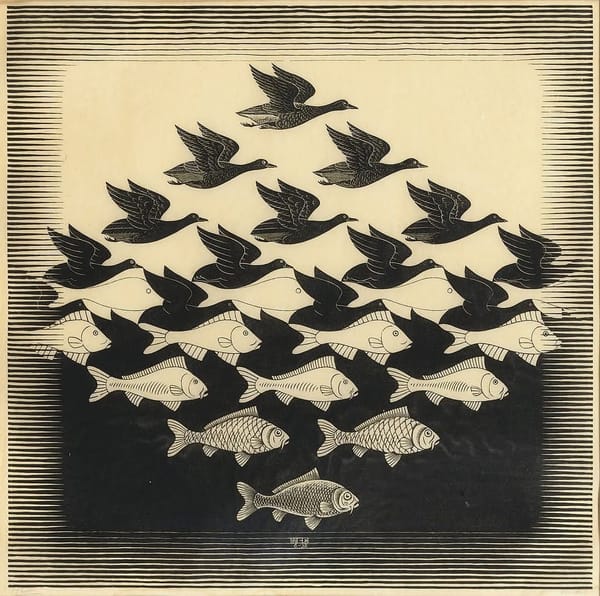
Through roundabout means, while at a carnival with the nephews, I came to feel a pang of sympathy for those men I derided at the ball game. The frames of the galloping horse in the moving-picture machine – this is how hypocrisy and complicity now operate. By our nature we hold differences, opposing stances, from one moment to the next, but the affairs of the modern day electrify this fact. The opposing frames flip faster, becoming a smooth motion or a steady alternating current, and now the dissonance does not pause long enough for us to work through it or reason about it. It grows constant, a background hum, that men may ignore without effort. My men and I are not exempt in the slightest; we out-source our woes to others, to other parts of ourselves, as surely as our accountants did to McKeel's fingertip. Smith calls “imbalances of humors” the culprit of his woes with women, only to recount his mischief to the men with an edge of pride. Olsen avoids Smith's vices but eats and drinks himself silly, shipping his stress off to his boulder-like midsection.
Which slop do we allow and which slop do we shun? This is the question. Which trades do we make and which do we turn down? The reason this is the question: any tool, carefully crafted, practiced with for decades, will become an extension of a man. A factory is but a tool for making tools. Is there inherent evil in this? Or is the evil in how men treat the tools – like a crutch, like a false idol? Are the master's tools automatically unfit for dismantling his house or is this adage letting the dismantler off far too easy? I think that wisdom comes from an era when dismantler and tool were more cleanly separated.
What happens in practice: we do not use the time our slop saves to rest, to fix the damage it causes. We make ourselves busier, more desiring of new slop – we do not claim the very time, the very peace, the slop brought. When the lesser of multiple evils is to out-source, to choose the quick option, we take it for granted; the ease of choosing the slop obscures the fact that all choices presented were indeed evil and we must change this. The cost we bring, as we do this, is more vigilance and cleverness. That is: the Baron will present us with something worse than bad nails next time, and we may not have time to argue each case – we may have to grow more creative.

July 8, 1901
The day after the celebrations for the 125th, on the way to the pub, I passed a Black church. I heard a hymn: we've died so long, we must be free.
There will be fits and starts, and there will be men whose conception of liberty is the denial of the liberty of others, but some things are inevitable. Or at least: there are vast and storm-like forces that a lone man cannot reroute. Yet they may only be inevitable through us, espoused by us, fought for by us. Only through grave action did slavery end or will women gain the vote, not Jefferson's lofty words alone – which would not have been written had slaves not picked his tobacco.
What is inevitable now? Hypocrisy as a background hum – or its end? Evangelical zeal, crazed notions of rapture and racial purity – or liberty? At least as inevitable as either one is the rising demand for the slop-factory, and the way men are liable to drown in slop when they cannot find distinction: something to care about, or to make others care about them.
I do not pretend to know much about the lot of the churchgoers and their forefathers, but I know that a current my forefathers helped to steer is now sweeping our tributaries into one river. In my workshop, with my wrenches and rags and slop-nails that harm my men, with my best work paying the same as my worst, I notice that current picking up speed. It is finding every new way to turn men into machines, each time we block some off. There are days where some of us cannot take it anymore and yet we do; where we are tired of being tired and yet we chug our coffee and persist.
Half a century down the line, the likes of the Baron may be no more, and councils of people will rule their own affairs; half century later than that, new barons may muck about. At the end of the cycle there is no guarantee that we will be anywhere near as free as we must, save the guarantees we create. God forbid we ignore this fact and simply keep trying, hard-headed, to force our opposing inevitabilities into battle. God forbid our alternating inevitabilities twist around each other and serve as nothing more than the power-source, the blood and soul, of some new machine.

July 26, 1901
We laid Olsen to rest. Liver gave out.
Smith, at the wake, told me about the lemmings on his ranch. Angry little things, territorial, not to be trifled with in herds despite their size. Says they'll run straight off a cliff together.
I spent these last weeks considering our great coiling machine-beast as a "something," a current or strange new organism, but it occurs to me: it may be nothing on its own, merely a shadow of us, standing before a trap we find ourselves in. Just us, moving toward a great attractor in the psychic landscape, like lemmings to a cliff. How many ledges would a lemming locate, if a lemming could locate ledges? Things previously advantageous to us become detrimental to us, and then we flock to them all the same; the exit of this path is neither hidden nor locked, but felt to be in the wrong direction. It took more effort than is practical for my team to oppose the slop-nails; fighting the Baron on every single instance feels a losing battle, but maybe this is the way? To not oppose at all feels like losing too; but maybe this is the way? It seems all we can do is tack like sailors: use the angle of the bitter slop-winds to our advantage, reaching one survivable island after another, until we sail out of the slop rather than drowning in it.
The true antidote to slop, the way to take hold of this slopportunity we have, is to promise each other things, and hold each other to those promises; to maintain freedom for one another, unattaching each other from wrought iron. The following is not a statement of hope, but of mere fact: we cannot do those things starting from the barrel of a gun or the pit of hunger – negotiation is no longer possible there. We can only do so from opposite ends of a table, where promises are made and kept in earnest. Slop makes this difficult; it makes some lazy and uncreative and power-hungry, others bitter and cold and food-hungry. It brings us to the negotiating table more frequently. But whenever we are back at that table – it does not really matter, in fact, if it is factory-made.




.jpg?ref=boilingdown.ghost.io)
_(14780992424).jpg?ref=boilingdown.ghost.io)

